
By Eric Duran, REALTOR® · The Fort Real Estate · Market data pulled from NTREIS on September 23 and October 1, 2026
If you’re moving to Fort Worth for a job at one of the hospitals, here’s the thing nobody tells you up front: the commute is not the decision.
Every neighborhood in this guide is a four to eight minute drive to Harris Methodist. All five hospital campuses sit within 1.14 miles of each other. So there is no proximity premium to buy here — you can’t pay more to be closer, because everything is already close.
What you’re actually choosing between is housing stock, what you’re allowed to do to the house, and which street you want to live on. That’s what this guide covers.
I pulled the market data myself out of NTREIS. Every drive time starts from a named intersection so you can reproduce it. Where the data doesn’t support a conclusion, I say so.
Why there are so many of you
Fort Worth has two Level I trauma centers sitting about a mile apart — JPS and Texas Health Harris Methodist. Harris earned its Level I designation in January 2023, which makes it one of only 22 Level I facilities in the entire state and the third busiest trauma center in Texas.
That designation isn’t a plaque. A Level I center has to keep trauma and general surgeons in the building 24 hours a day, plus specialists across neurosurgery, orthopedics, vascular and thoracic. Which means a lot of physicians, and a lot of training.
JPS alone trains more than 200 resident physicians a year across ten sponsored programs — emergency medicine, family medicine, OB/GYN, orthopaedic surgery, psychiatry, podiatry, oral and maxillofacial surgery, and fellowships in geriatric and sports medicine. It also hosts residents from UT Southwestern and Baylor. And the Burnett School of Medicine at TCU sits at 1100 W. Rosedale, almost exactly in the middle of all of it.
So if you’re reading this because you matched here, or took a job here, or your program starts in July — you’re one of a few hundred people doing the same thing this year. That’s why I wrote this down instead of explaining it one phone call at a time.
I drove an ambulance into these ERs, and I worked at Cook Children’s for a stretch. I know this district from the inside, which is a different thing from knowing the listings.
The commute is a wash. Here’s the proof.
| Neighborhood | Measured from | Drive | Bike | Walk | Median sale |
|---|---|---|---|---|---|
| Mistletoe Heights | Mistletoe / Forest Park | 4 min | 7 min | 27 min (1.2 mi) | $504,000 |
| Fairmount | College Ave / Allen | 5 min | 6 min | 23 min | $512,500 |
| Alamo Heights | Donnelly / Ashland | 6 min | 21 min | drive only | $297,500 |
| Berkeley Place | Windsor Pl / Berkeley Pl | 6 min | 9 min | 37 min | $665,000 |
| Ryan Place | Elizabeth & Ryan Pl | 7 min | 9 min | not measured | $567,500 |
| Arlington Heights | Bryce / Clover | 8 min | 22 min | drive only | $449,500 |
Look at Alamo Heights and Berkeley Place. Same six minute drive. Berkeley Place costs 2.2 times as much.
Then look at Fairmount and Ryan Place. Fairmount is closer and cheaper. The one that’s further away costs more.
Across all six neighborhoods there is essentially no relationship between drive time and price. The drive times span four minutes. The prices span $297,500 to $665,000. Those two things are not connected here.
So don’t shop by proximity. There’s nothing to buy.
One thing in your favor. A 7am shift start puts you on the road ahead of the office commute rather than in the middle of it. When I was working at Cook Children’s the drive was easy for exactly that reason. So if anything the times above are conservative for a day-shift start, and a 7pm start is easier still.
One honest note about walking. You’ll see walk times above and I’d tell you not to put much weight on them. I don’t think anyone is realistically walking from these neighborhoods to a hospital shift. Fairmount maybe, especially if you’re living right off Magnolia. Everybody else is driving.
Biking is a different story. Ryan Place is six minutes, Mistletoe Heights is seven, Berkeley Place is nine. If you’re coming from Arlington Heights you can pick up the Trinity Trails near Mistletoe and ride in from there, which is about 22 minutes.
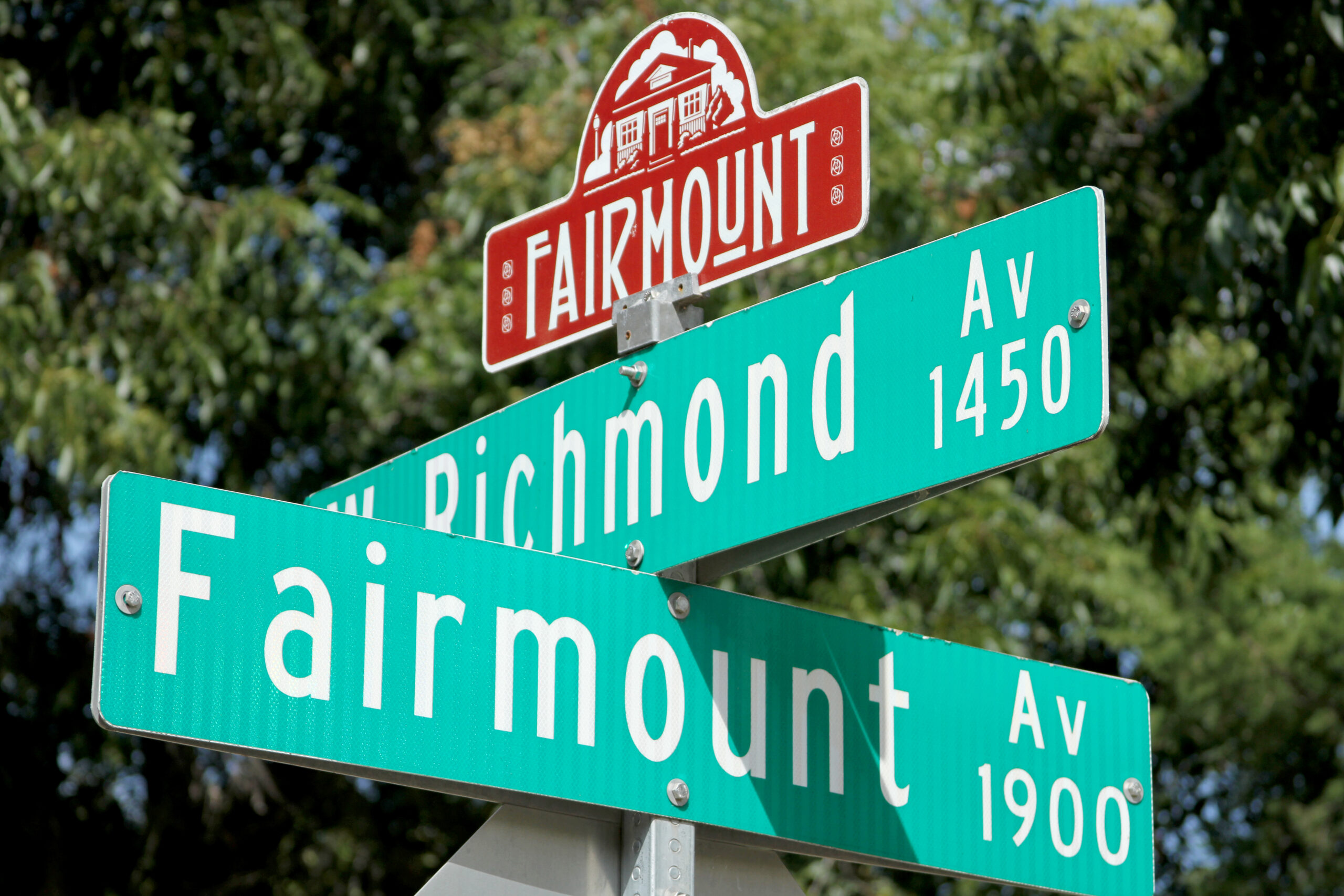 Fairmount and Richmond. The medallion on the signpost is the tell — this is a locally designated historic district, and that changes what you can do to the house.
What can I actually renovate? (the question I get most)
This is the first thing buyers ask me in these neighborhoods, and it’s the right question.
Some of these neighborhoods are locally designated historic districts. That is not the same as being on the National Register. The National Register is largely honorific. A local designation is binding. If your house is in a locally designated district, exterior work requires a Certificate of Appropriateness from the City before you touch it.
Locally designated: Elizabeth Boulevard (1980, the first in the city), Fairmount / Southside (1990), and Mistletoe Heights (2002).
Berkeley Place, Ryan Place and Alamo Heights are not designated districts. Fort Worth publishes a historic districts map with fourteen districts on it, and none of those three appear.
The Ryan Place trap
Ryan Place itself isn’t a designated district. Elizabeth Boulevard, which runs through it, has been one since 1980.
I checked every one of these against the city’s own map, using houses that actually closed in the last twelve months:
| Sale | Designation | What that means |
|---|---|---|
| 1112 Elizabeth Blvd — $1,625,000 | Historic Landmark | Approval for any exterior work |
| 1309 Elizabeth Blvd — $1,000,000 | Historic Landmark | Approval for any exterior work |
| 1306 Elizabeth Blvd — $960,000 | Historic Landmark | Approval for any exterior work |
| 1208 Elizabeth Blvd — $910,000 | Historic Landmark | Approval for any exterior work |
| 2912 6th Ave — $730,000 | Demolition Delay | Approval to demolish or relocate only |
| 2600 Lipscomb St — $755,000 | None | No historic review |
| 2620 Ryan Ave — $570,000 | None | No historic review |
| 3024 James Ave — $130,000 | None | No historic review |
Every one of those is a Ryan Place listing, and there are three different rules across them.
A $910,000 house on Elizabeth Boulevard needs city approval to change a window. A $730,000 house on 6th Avenue doesn’t — but it carries a Demolition Delay designation, so you can’t tear it down or move it without approval either. A $755,000 house on Lipscomb a few blocks from both has no historic restriction at all.
That matters most if you’re buying to scrape and rebuild. Demolition Delay doesn’t stop you remodeling. It does stop you demolishing.
So “Ryan Place” on a listing tells you nothing about what you’re allowed to do to the house. I check the specific parcel on the city’s map before we write an offer, every time.
What actually gets reviewed
Per the Fairmount design standards, these are the things that get flagged:
- Replacement windows and doors, and vinyl windows in particular
- Vinyl or metal siding
- Painting brick that was never painted
- Enclosing a front porch
- Hardy board above ground level
- Standing seam metal roofs
Applications are due the third Monday of the month. Hearings are the second Monday. So this is a monthly calendar, not a weekend project.
The part that should get your attention. Under the city’s historic preservation ordinance, if work gets done without approval — demolition especially — the property can be blocked from getting any building permit for five years. No curb cuts for three years. No parking lots for three years. That’s not a fine you pay and move on.
The median home in Fairmount was built in 1924. In Mistletoe Heights, 1922. Those are original single-pane windows on a lot of these houses, and replacing them is the most common thing a new owner wants to do. In two of these neighborhoods that’s a hearing.
I’m not telling you to avoid designated districts. The restrictions are a big part of why these streets still look the way they do, which is probably why you’re interested in the first place. I’m telling you to know which side of the line your house is on before you write an offer with a renovation budget attached.
These houses are old. Are they in good condition?
This is the second question I get, and the honest answer starts with how old we’re talking.
| Neighborhood | Median year built | Older than the typical Fort Worth house by |
|---|---|---|
| Mistletoe Heights | 1922 | 64 years |
| Fairmount | 1924 | 62 years |
| Berkeley Place | 1928 | 58 years |
| Ryan Place | 1932 | 54 years |
| Alamo Heights | 1943 | 43 years |
The median year built across all of Fort Worth is 1986.
So you’re not buying a Fort Worth house. You’re buying a house from a completely different era of building, in a city where half the housing stock went up after 1986.
That’s not a reason to walk away. People have been maintaining these houses for a hundred years and plenty of them are in better shape than something built in 2005. But it changes how you inspect.
How I inspect these
On a house in these neighborhoods I bring in specialists, not just a general inspector: a plumber, an electrician, a foundation inspection and a roofer. Four separate trades, every time.
A general inspection on a 1924 house tells you there might be an issue. It doesn’t tell you what it costs to fix, and on these houses the number matters because it determines whether the deal works.
If an agent tells you a general inspection is enough on a hundred-year-old house, get a different agent.
Condition varies block to block, and you can see it
Fairmount is turning. There are more remodels every year. But there are still plenty of houses that haven’t been touched, and they’re sprinkled throughout rather than concentrated in one spot.
What I see driving these blocks: the closer you get to 35W, the fewer of them have been remodeled. That’s my own read from working the area, not something I can show you in a spreadsheet, but it’s consistent enough that I’d tell you to drive it yourself before you narrow your search.
So why do people buy here?
Because of everything the restrictions protect.
The trees. Mature canopy on most of these streets. You can’t plant that, and the new parts of Fort Worth don’t have it.
The houses are all different. Every one is its own thing. There is no floor plan repeated four times on a block.
Sidewalks. All of these neighborhoods have them, which sounds minor until you’ve lived somewhere that doesn’t. You won’t walk to work from here, but you’ll walk in your own neighborhood, and a lot of Fort Worth can’t say that.
Front porches, especially in Fairmount. Big ones. People actually sit on them. Between the porches and the trees it’s a different way of living in a house than a back patio behind a fence.
Magnolia, if you’re in Fairmount. Restaurants and bars at the edge of the neighborhood and you can walk to them. South Main has come up a lot over the past several years too and it’s worth a look while you’re down here.
Berkeley Place at Halloween. Berkeley Place is where Fort Worth goes to trick-or-treat. People drive in from across the city for it. If you have kids, go stand on those streets on October 31st before you decide anything else — it tells you more about the neighborhood than I can.
The six neighborhoods, by the numbers
| Neighborhood | Closed sales | Median sale | Sale to list | Days to contract | Median sqft | Median year built | $/sqft | Active now |
|---|---|---|---|---|---|---|---|---|
| Alamo Heights | 26 | $297,500 | 97.4% | 63 | 1,282 | 1943 | $244 | 15 |
| Arlington Heights | 99 | $449,500 | — | 24 | — | 1940 | $290 | — |
| Mistletoe Heights | 16 | $504,000 | 96.0% | 65 | 1,825 | 1922 | $279 | 6 |
| Fairmount | 57 | $512,500 | 97.8% | 39 | 1,795 | 1924 | $278 | 28 |
| Ryan Place | 28 | $567,500 | 98.0% | 57 | 2,094 | 1932 | $275 | 12 |
| Berkeley Place | 23 | $665,000 | 97.3% | 22 | 2,062 | 1928 | $334 | 5 |
Trailing twelve months. Fairmount and Arlington Heights pulled September 23, 2026. The rest October 1, 2026.
Read the closed-sales column. Fairmount rests on 57 sales. Mistletoe Heights rests on 16. A median built on 16 sales is indicative, not definitive, and I’d treat it that way.
Berkeley Place is the fastest and the most expensive. Twenty-two days to contract and $334 a square foot, against roughly $275 to $279 for Mistletoe Heights, Fairmount and Ryan Place. It’s the premium pocket and it isn’t close on price per foot.
Alamo Heights is the entry point. Median $297,500, median 1,282 square feet. Nothing closed above $519,000 all year. It also has the loosest inventory of the group — 15 active against 26 closed. If your budget is under $350,000 and you work at one of the hospitals, this is where you can actually buy, at the same six minute drive as Berkeley Place.
Ryan Place splits in two and the median hides it. Sales ran from $130,000 for a fixer up to $1,625,000 on Elizabeth Boulevard. The $567,500 median is correct and it doesn’t describe either end. Tell me which end you’re shopping and the numbers change completely.
Mistletoe Heights has almost nothing for sale. Six active listings, and what’s sitting there has been sitting — the median active listing has been on market 117 days, with two over 340. Closed sales move in 65 days. The standing inventory is a different story from the sold inventory.
Forest Park Boulevard
There are houses on Forest Park that face Forest Park, and they hold their value. The two that closed in Berkeley Place over the last twelve months sold at $602,000 and $625,000 — both built in 1927, both with pools, both listed at $650,000. One of them sat on the market 169 days when the neighborhood median is 22, which is worth knowing, though two sales isn’t enough to tell you anything about the street itself.
Forest Park is a busier street than most in these neighborhoods. That’s the real conversation, and it’s one worth having before you tour rather than after.
Can I rent it out short term?
Short answer, usually no. Fort Worth is stricter than most people expect.
Under the city’s February 2023 ordinance, short-term rentals — anything rented for 1 to 29 days — are prohibited in every residential zoning district. The ban was challenged in court and the city won.
They’re allowed in mixed-use, form-based, commercial and industrial zoning. So the corridors can work where the residential streets can’t, and the line is sharp. I pulled the zoning on specific addresses off the city’s map:
| Address | Zoning | Short-term rental |
|---|---|---|
| 1300 W Magnolia Ave | NS-T4, form-based | Allowed |
| 1200 S Main St | NS-T5, form-based | Allowed |
| 2222 W Magnolia Ave — a house | A-5, residential | Prohibited |
| 2620 Ryan Ave | A-5, residential | Prohibited |
| 1208 Elizabeth Blvd | A-10, residential | Prohibited |
Look at the third row. That’s a house with a Magnolia address that sold for $575,000, and it’s zoned residential — so it cannot be a short-term rental even though the commercial buildings down the block can. Being on Magnolia isn’t the test. The zoning on your parcel is.
If you do operate one legally, you register with the city: $150 the first time, $100 a year after, plus 9% hotel occupancy tax filed monthly by the 25th even in a month you collected nothing.
A longer-term hold is a different question and a much easier yes. There are a lot of apartments in this area, which tells you there’s real rental demand, and if you’re here for a three year residency and thinking about keeping the house afterward that math usually works. Ask me and I’ll run it on a specific property.
What if I’m here on a travel contract?
Then you’re renting, not buying, and most of this guide isn’t written for you. Stay for one thing though, because it’ll save you a headache.
Every travel nurse housing guide online points you at nightly booking platforms. In Fort Worth that mostly doesn’t work. The city prohibits short-term rentals in every residential zoning district and a court upheld the ban. So that 1920s bungalow in Fairmount listed by the night is probably not legal, and “probably not legal” is not something you want attached to your housing when you’re a thousand miles from home with a 7am shift on Monday.
Here’s what nobody tells you. Fort Worth’s ordinance only covers rentals of 1 to 29 days. A standard 13-week contract runs about 91 days. That puts you completely outside it.
So you can absolutely rent a house in one of these neighborhoods. You need a real lease of 30 days or more rather than a nightly booking, which usually means dealing with an owner or a property manager instead of a platform. Different search, better outcome, and nobody can make you move out mid-contract because a neighbor complained.
Two other things worth knowing while you’re here. There are a lot of apartments in this area, so you have options beyond houses. And all of these neighborhoods have sidewalks and mature trees, which matters more than you’d think when you’re new to a city and don’t know anybody yet.
A lot of people take a contract here and end up staying. If that’s you and you start thinking about buying, call me. I’ll tell you the same things I’ve told you here, which is the whole reason I wrote it down.
How I measured all of this
Market data is from NTREIS, the MLS our brokerage uses. I drew a polygon on each neighborhood myself and pulled closed, active, pending and coming soon listings for the trailing twelve months. Fairmount and Arlington Heights were pulled September 23, 2026. Mistletoe Heights, Berkeley Place, Ryan Place and Alamo Heights were pulled October 1, 2026.
All the medians above are from closed sales only. That matters — a report that blends active listings into the median gives you a number that describes asking prices, not what people actually paid.
Drive, bike and walk times are measured to Harris Methodist at 1301 Pennsylvania Avenue, each one starting from a named intersection listed in the table so you can run it yourself.
I used one destination on purpose. The five campuses are tightly clustered:
| Campus | Address |
|---|---|
| Texas Health Harris Methodist | 1301 Pennsylvania Ave |
| Baylor Scott & White All Saints | 1400 8th Ave |
| Cook Children’s | 801 7th Ave |
| Burnett School of Medicine at TCU | 1100 W Rosedale St |
| JPS Health Network | 1500 S Main St |
The two furthest apart — Cook Children’s and JPS — are 1.14 miles from each other. Harris Methodist sits 0.18 miles from Cook Children’s. At driving speed the whole district is a two to four minute spread, which is smaller than the difference between your commute at 6:30am and your commute at 6:30pm. So one destination covers it, and you can adjust.
Historic designations and zoning were checked parcel by parcel against the City of Fort Worth’s own published maps, not from a neighborhood label.
What I don’t know. Where the data doesn’t support a conclusion I’ve said so rather than filling the gap. Sixteen closed sales in Mistletoe Heights is a thin sample. Two sales on Forest Park tell you nothing about the street. My read on the remodel gradient near 35W is a field observation, not a measurement.
Market conditions change. If you’re reading this more than a quarter after the pull dates above, call me and I’ll pull it fresh.
Where to start
Three of these neighborhoods have their own market profiles on this site, each updated as new NTREIS data comes in: Fairmount, Near Southside and Arlington Heights. If you’re also looking at the TCU side of town, the TCU area guide covers those six neighborhoods the same way — worth a look, since the Burnett School of Medicine ties the two areas together.
If you’re relocating for a job at one of these hospitals, you’re probably trying to pick a neighborhood from a few hundred miles away, off listing photos and a map. I’ve sold houses on most of these streets. Call me before you narrow it down and I’ll tell you what the photos don’t.
Eric Duran, REALTOR®
The Fort Real Estate · 817-703-1333 · hello@thefortre.com
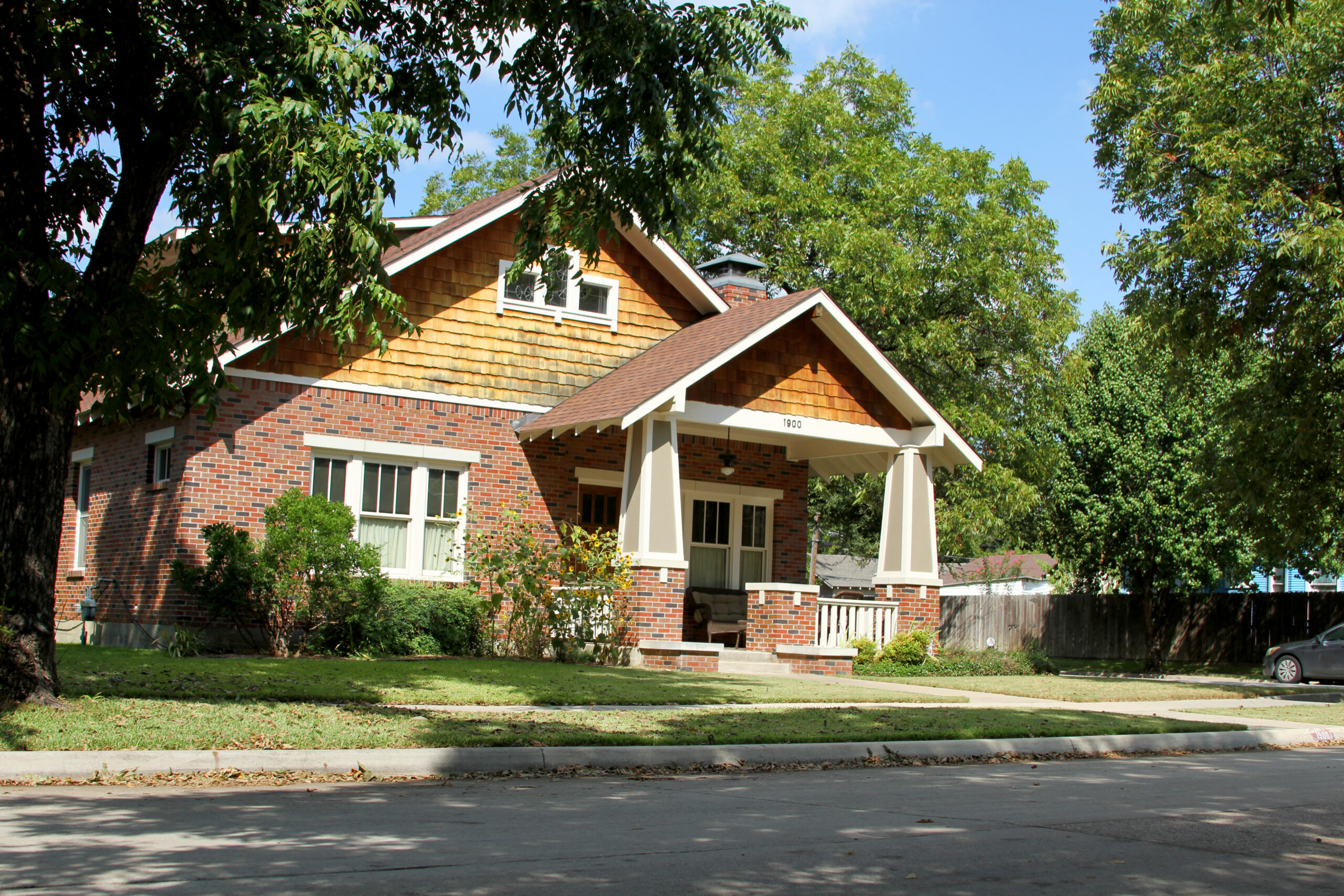 A Fairmount bungalow. The porch, the trees and the sidewalk are most of the reason people choose these streets.